Building Digital Communities in Clinical Research
Enrollment isn't the end of the patient journey — it's the beginning. Digital communities can become a scalable, relationship-centered layer of engagement throughout a study.
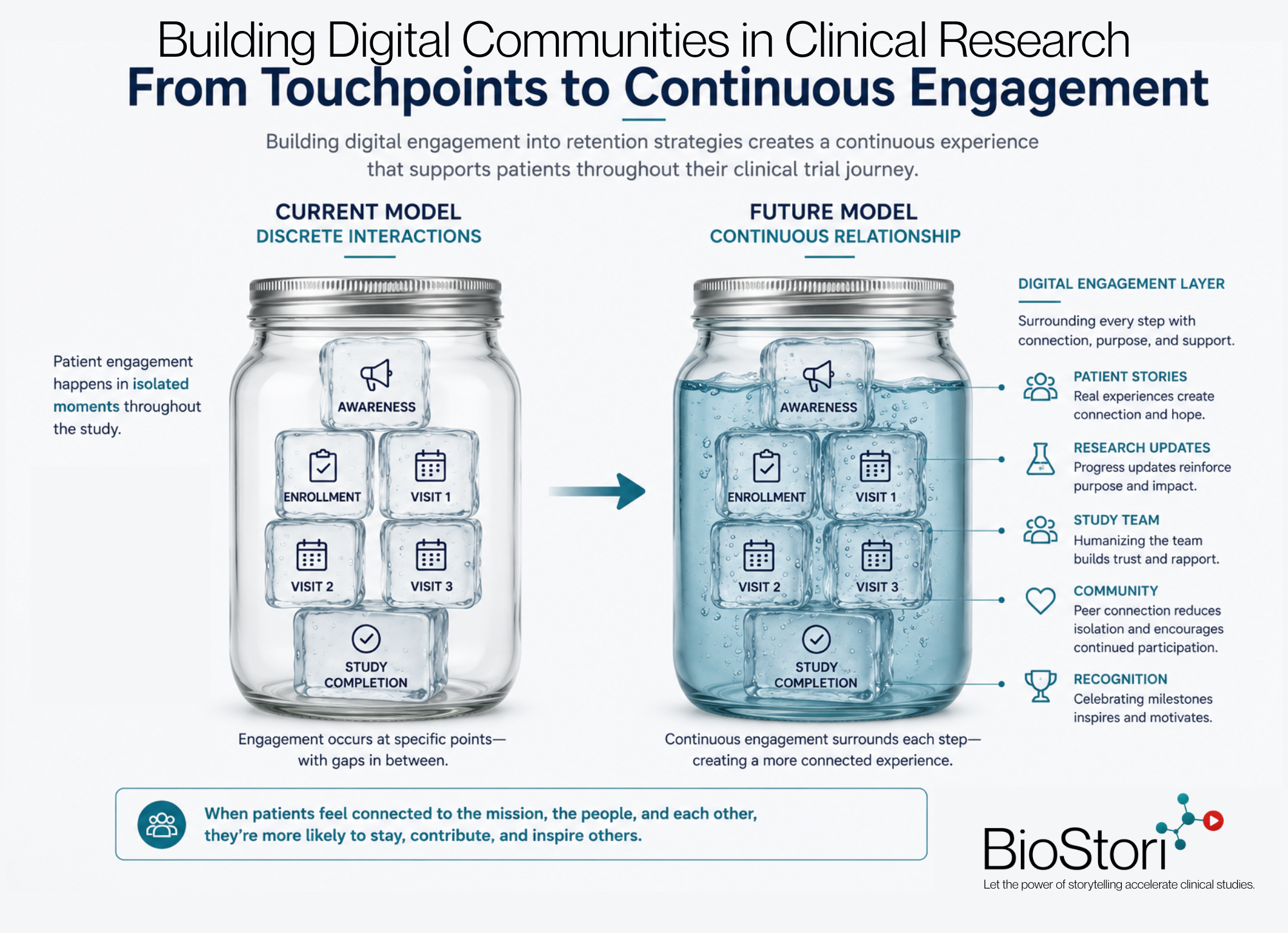
Enrollment is not the end of the patient journey; it's the beginning of what can be months or even years of participation. Throughout that time, patients may need reassurance, education, encouragement, and a continued sense of purpose. At the same time, research sites are balancing increasing workloads, complex protocols, and limited resources, making it difficult to provide every participant with ongoing engagement beyond what is required for study conduct. The result is a gap between enrollment and long-term participation. While the reasons patients withdraw from clinical trials are complex and highly individualized, participant attrition remains a significant challenge, with studies often reporting dropout rates of around 30%.
Interestingly, many patients fill this gap themselves. Across social media, patients document their treatment journeys, share updates, answer questions from others, and join online communities centered around a shared diagnosis or research experience. These communities aren't created by study sponsors or research sites, rather they emerge because patients naturally seek connection with others who understand what they're experiencing. They look for belonging, beyond their trial participation.
Through my work interviewing patient participants, I've seen this firsthand. Many of the individuals I spoke with participated in clinical research decades ago, yet they still describe their experience with an incredible sense of pride. They don't remember simply being “a participant in a trial.” They remember contributing to something much larger than themselves. They recognize that the research they joined has helped shape treatments that are benefiting patients today, and they find meaning in knowing their participation may continue to help future generations. That sense of purpose is not created by study procedures alone. It is reinforced through stories, shared experiences, milestones, and ongoing conversations, many of which happen organically through digital communities.
Rather than viewing digital communities as something happening outside of clinical research, study teams should recognize the opportunity to intentionally incorporate digital engagement into their patient retention strategies. Within appropriate regulatory and ethical boundaries, organizations can create opportunities for participants to engage with the broader mission of the research beyond their scheduled study visits. This may include sharing participant stories, celebrating research milestones, introducing members of the study team, providing educational content, or highlighting the collective impact participants are making. By facilitating an ongoing sense of connection and community on the platforms patients already use, study teams can help participants feel like more than a subject in a protocol—they can feel like an active contributor to the advancement of medicine. Rather than replacing traditional retention strategies, digital communities have the potential to become a scalable, relationship-centered layer of patient engagement that complements the clinical experience throughout the study.